


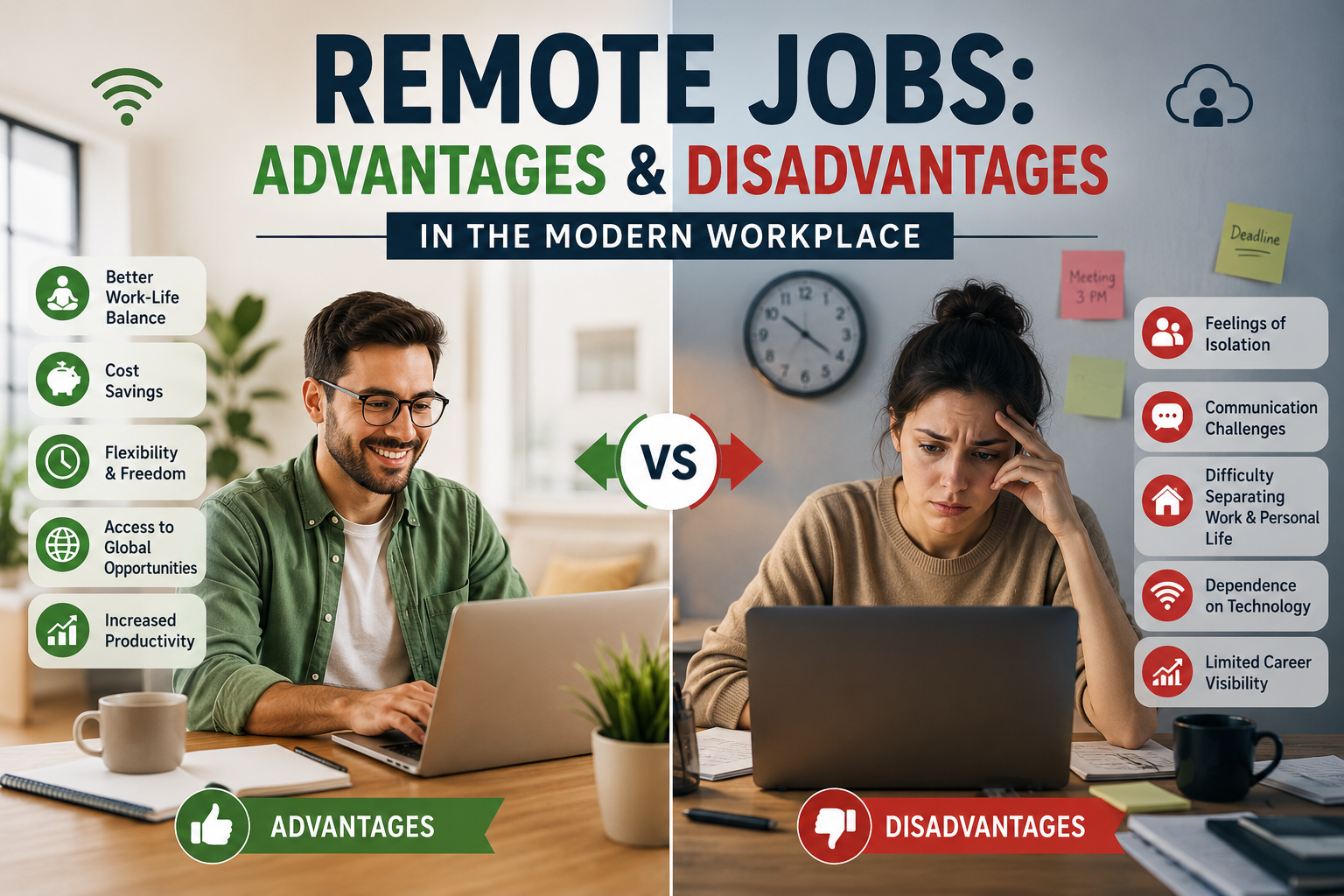
Over the last few years, remote work has transformed from a temporary solution into a long-term employment model for businesses worldwide. Advances in technology, cloud-based collaboration tools, and changing employee expectations have made remote jobs more common than ever before. Many organizations now offer flexible work arrangements, allowing employees to work from home or any location with an internet connection.
While remote work offers numerous benefits, it also presents certain challenges for both employees and employers. Understanding these advantages and disadvantages can help professionals make informed career decisions and help businesses create effective remote work policies.
What is a Remote Job?
A remote job is a position that allows employees to perform their work outside a traditional office environment. Instead of commuting to a workplace every day, remote employees use digital tools such as video conferencing, project management software, email, and instant messaging platforms to communicate and collaborate with their teams.
Remote jobs are available in various industries, including IT, digital marketing, customer support, content writing, graphic design, finance, education, and many more.
Advantages of Remote Jobs
1. Better Work-Life Balance
One of the biggest advantages of remote work is improved work-life balance. Employees can spend more time with their families, pursue hobbies, and manage personal responsibilities more efficiently. Without daily commuting, workers often have additional hours available for personal development and relaxation.
2. Reduced Commuting Stress
Daily travel to and from the office can be exhausting and time-consuming. Remote jobs eliminate commuting, helping employees save both time and money. This can reduce stress levels and contribute to improved mental well-being.
3. Increased Flexibility
Many remote jobs offer flexible schedules, allowing employees to work during their most productive hours. This flexibility can help individuals manage family commitments, education, or other personal responsibilities while maintaining professional productivity.
4. Cost Savings
Working remotely can significantly reduce expenses related to transportation, fuel, public transit, office attire, and daily meals. Employees often experience substantial financial savings over time.
5. Access to Global Opportunities
Remote work removes geographical barriers. Professionals can apply for jobs with companies located in different cities, states, or even countries. This expands career opportunities and allows businesses to hire talent from a wider pool of candidates.
6. Improved Productivity
Many employees report higher productivity when working remotely. A quieter environment, fewer office distractions, and the ability to create a personalized workspace can help individuals focus more effectively on their tasks.
7. Business Benefits
Employers also benefit from remote work. Companies can reduce office space costs, utility expenses, and infrastructure investments. Additionally, remote hiring enables organizations to recruit highly skilled professionals regardless of location.
Disadvantages of Remote Jobs
1. Communication Challenges
Effective communication can become more difficult in a remote environment. Without face-to-face interactions, misunderstandings may occur, and collaboration can sometimes take longer than in traditional office settings.
2. Feelings of Isolation
Working from home may lead to social isolation. Employees can miss the sense of community, teamwork, and casual interactions that naturally occur in a physical workplace. Over time, this may impact morale and engagement.
3. Difficulty Separating Work and Personal Life
While remote work offers flexibility, it can also blur the boundaries between professional and personal life. Some employees find it difficult to “switch off” after work, leading to longer working hours and potential burnout.
4. Dependence on Technology
Remote work relies heavily on internet connectivity, software platforms, and digital communication tools. Technical issues such as internet outages, software failures, or cybersecurity risks can disrupt productivity.
5. Limited Career Visibility
In some organizations, remote employees may have fewer opportunities for direct interaction with leadership teams. This can sometimes affect networking opportunities, recognition, and career advancement if not managed properly.
6. Home Distractions
Not every home environment is ideal for work. Household responsibilities, family interruptions, noise, and other distractions can reduce concentration and impact performance.
7. Team Collaboration Challenges
Brainstorming sessions, creative discussions, and spontaneous problem-solving can be more effective in person. Remote teams often need additional tools and processes to maintain strong collaboration and innovation.
How to Succeed in a Remote Job
To maximize the benefits of remote work, employees should:
- Create a dedicated workspace.
- Maintain a consistent daily routine.
- Use productivity and collaboration tools effectively.
- Communicate regularly with colleagues and managers.
- Take breaks to avoid burnout.
- Set clear boundaries between work and personal life.
- Continue learning and developing professional skills.
Conclusion
Remote jobs have revolutionized the modern workplace by providing flexibility, convenience, and access to global career opportunities. They offer significant benefits such as improved work-life balance, cost savings, and enhanced productivity. However, remote work also comes with challenges, including communication difficulties, social isolation, and maintaining work-life boundaries.
The success of remote work depends on effective communication, strong self-discipline, and the right technological infrastructure. For many professionals and organizations, a well-managed remote work model can deliver outstanding results while supporting employee satisfaction and business growth.
As the future of work continues to evolve, remote jobs are likely to remain an important part of the global employment landscape.